The LC Column is Holding You Back
Peptide mapping is the gold standard for characterizing biotherapeutic proteins, but traditional LC-MS is slow, expensive, and a major pipeline bottleneck. We engineered a better way. By replacing the 45-90 minute liquid chromatography step with automated direct infusion, the RaPiD-mAb-MS™ platform accelerates analysis by 50-fold—without sacrificing data quality.
The RaPiD-mAb-MS™ Platform
Overview of RaPiD-mAb-MS™ Workflow
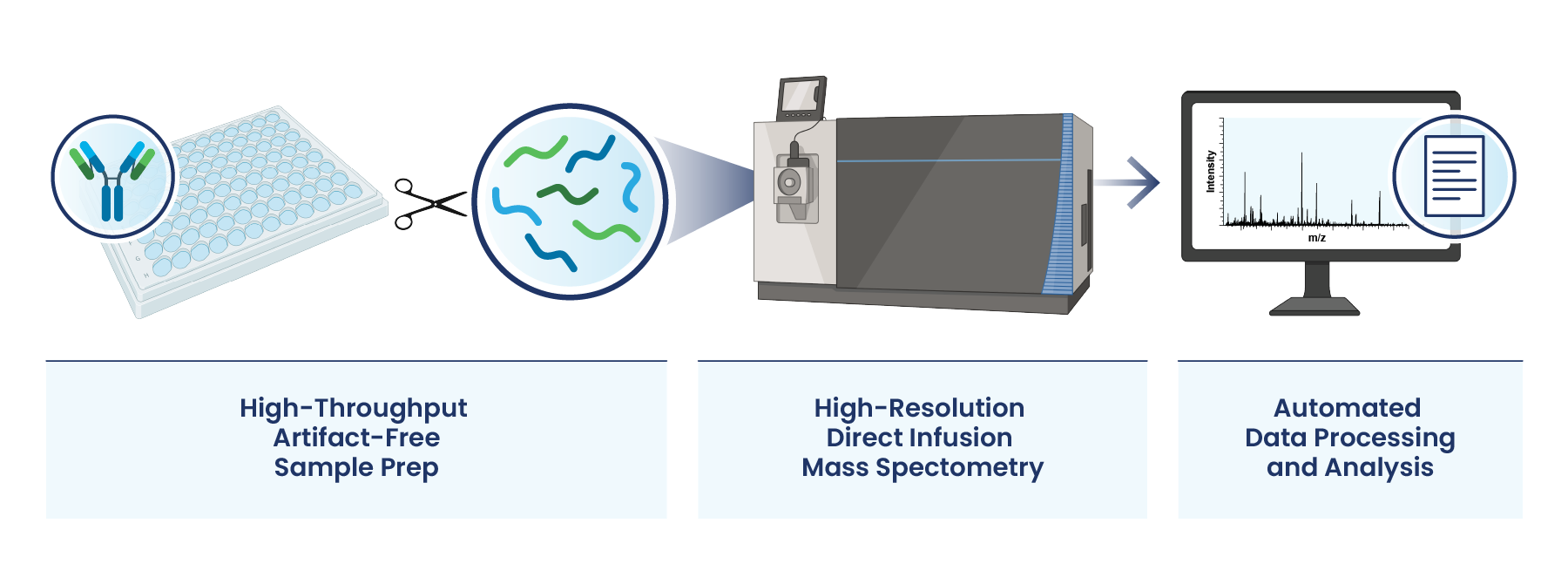
The Four Pillars of the RaPiD-mAb-MS™ Platform
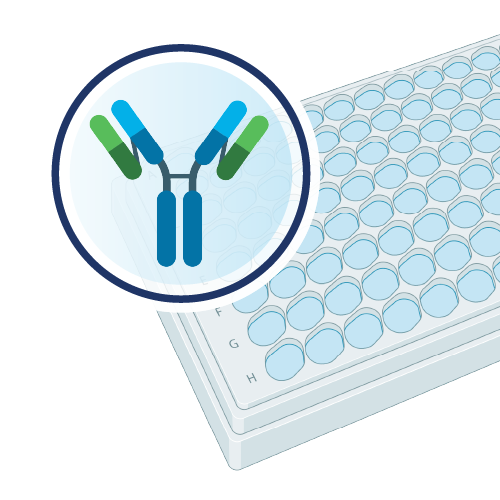
High-Throughput Sample Prep
Our standard 96-well format kits are compatible with both bench pipetting and automated liquid handlers.

Artifact-Free Direct Infusion
Proprietary cleanup chemistry seamlessly removes excipients, sugars, and surfactants, eliminating the need for tedious desalting steps.
High-Resolution MS
By eliminating chromatography—and its tendency to lose many short or highly hydrophobic peptides—the RaPiD-mAb-MS™ platform leverages high-resolution mass spectrometry to provide ~100% sequence coverage and accurate quantification of modifications.
Automated Data Analysis
Our RaPiD-Analyze™ software automates the entire process—from generating the instrument method files to analyzing the infusion spectra and quantifying Critical Quality Attributes (CQAs) like oxidation, deamidation, and glycosylation. It provides a full report, with the option for interactive data viewing, allowing you to easily view PTMs, ID quality, and coverage for individual mAb samples, or to compare data across multiple antibodies.
Seamless Hardware Integration
Zero Capital Expenditure Required
You do not need to purchase new, dedicated ion sources or specialized capital equipment to obtain 50X increased throughput.
We designed the RaPiD-mAb-MS™ platform to lower the barrier to adoption.
Our workflow is fully compatible with the standard microflow LC autosamplers (e.g. Thermo Fisher Vanquish) and mass spectrometers that are already in your lab.
By adapting existing switching valve setups to wash and load samples concurrently with analysis in parallel, sample-to-sample cycle times are reduced to roughly 2 minutes.
Simply bypass the column, load the plate, and start analyzing.
See how the RaPiD-mAb-MS™ Platform technology works
Ready to see the data?

